




Crawfish season is here, and there’s no better way to celebrate than with a backyard boil. If you’ve never hosted one before — or just want to make sure it’s a success — Joel Barrios, owner of Bayou Boys Catering in Needville, TX, has you covered.

A native of Lafourche Parish, Louisiana, Barrios knows a thing or two about crawfish. There are many different ways to enjoy crawfish, but he recommends keeping it simple. We asked the pro to share his full guide to pulling off the perfect boil.
Prepping for Quality
Souring your crawfish, holding them until ready to boil, and prepping them for the boil, is just as important as the cooking process. Unwanted bycatch, muddy crawfish, or dead loss can be easily mitigated to ensure a delicious boil!
Selecting Crawfish
Just like smoking meats, in order to finish with a quality product, you must start with a quality product! Find an honest and reputable source to purchase crawfish. Crawfish are seasonal, and quality can vary drastically throughout the season. The best time of the year to enjoy crawfish is March – June. Crawfish come in multiple grades (unlike shrimp, crawfish are not typically graded count per pound, and size can be subjective). Always ask to see the product before purchasing. The general terms for purchasing crawfish are:
- Peelers: Smaller crawfish that are graded out and processed for cooking.
- Field Run: Sacked in the field and sold directly to the consumer without additional processing. It is not uncommon to find bait or bycatch in these sacks.
- Washed & Graded: Field Run that are taken to a processing facility to be cleaned, sorted, and re-sacked for retail. Sizes vary from Medium to X-Large.
- Dead Loss: Dead crawfish within a sack that are not suggested to boil.
Holding & Transporting
Crawfish can be difficult to hold during certain times of the year, however a good rule of thumb is to keep your crawfish cool and damp. Make sure to handle crawfish with care. Try not to drop the sack hard onto the ground. Remember to ask your supplier about the current state of the crop. Low oxygen levels in the water can result in poor quality crawfish, and can make them difficult to hold. Do not “unsack” your crawfish until ready for cleaning. This will make them easier to handle and transport. A Good practice is to hold your crawfish sack in a cooler until shortly before boil. Simply place a towel or burlap over the sack and cover with ice. Make sure to vent the bottome of the cooler and allow melted ice to drain. Do not hold crawfish in standing water.
Cleaning
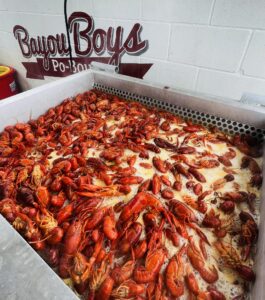
Crawfish don’t need to be cleaned until right before boiling. All you need to properly wash crawfish is a large cooler and fresh running water. Simply empty the sack into the cooler, and allow water to run until clear. Drain the water and hold in the shade until ready to boil (approx. 30 mins before boil). Do not add anything to the water or allow crawfish to soak for an extended period of time! Regardless of if you purchase washed and graded, or field run, it’s still good practice to look through your sack for unwanted bycatch or dead crawfish.
Boiling Process
The great debate about crawfish is all in the boil. Recipes and techniques vary from region to region. Where the water gets muddy is… “To Dust or Not to Dust.” Dusting typically means crawfish are cooked in little-to-no seasoning and then sprinkled afterwards. The traditional method is “Not to Dust” and allow crawfish to soak in seasoned water.
Joel is used to doing things one way. He explains the Soak Method below.
Seasoning the Water
The market is saturated with lots of options when it comes to boil seasonings. Barrios suggests finding a brand you enjoy and following the recipe provided. Most seasoning companies will provide all the information needed to ensure your boil comes out delicious. In addition to dry seasonings, it’s common to add liquid boil (concentrated seasoning in a bottle) and citrus. Fixings such as onions and garlic can help season boil water, and serve as delicious additions to boiled crawfish.
Boiling Process
- Step 1: Bring water to a boil and add dry seasonings, liquid boil, citrus.
- Step 2: Add fixings (onions, potatoes, whole cloves garlic) with longer cook times first, and cover pot.
- Step 3: Allow to boil for a couple minutes and then add crawfish, stirring occasionally.
- Step 4: Once crawfish come to a rolling boil, stir, and kill fire.
- Step 5: Add fixings that only are required to soak such as corn, mushrooms, etc.
- Step 6: Reduce water temperature to 165 to 140 degrees.
- Step 7: Soak crawfish until fully submerged in soak water, approx. 30 to 40 minutes.
- Step 8: Enjoy!
Water Management
In the end it really all boils down to water management, which can be broken down into 2 components, seasoning and temperature control. If you can master these two, you can make
delicious boiled crawfish every time. Seasoning is a matter of preference. He suggests starting with a popular recipe, and adjusting it to your taste preference. Simply taste your water as you go. Keep adding ingredients/spices until you find a profile that you believe will satisfy the entire family. Make mental notes, or even write it down. That way your boil will be consistent. Also, the next time you’re invited to someone else’s boil, Barrios recommends asking questions. He says, “we all love sharing our secrets.”
Temperature Control
Temperature control is just as important, if not more important than seasoning. If your crawfish don’t peel properly or come out undercooked, it really doesn’t matter how well the water is seasoned. Your objective is to quickly reduce your water temperature to 165-140 degrees. This will allow your crawfish and fixings to marinate in that perfectly seasoned water for an extended period of time. This can be done is multitude of ways. Some folks us ice, frozen fixings, a water bath, or the two-pot-system. Barrios prefers the two-pot system.
Two-Pot System
Using two pots isn’t necessarily beneficial when boiling one sack of crawfish. However, when boiling multiple sacks, using two pots can achieve a “cleaner” flavor profile along with some cost efficiencies.
- Step 1: Set out two pots, and fill both half way with plain water.
- Step 2: Add seasoning to Soak Pot, and nothing to Boil Pot.
- Step 3: Bring both pots to a boil.
- Step 4: Reduce fire on Boil Pot to a simmer.
- Step 5: Cook fixings in Soak Pot, add individually according to cook times, and soak as desired.
- Step 6: Remove fixings from Soak Pot and set aside.
- Step 7: Once Soak Pot temperature reaches 165, bring Boil Pot back to rolling boil.
- Step 8: Add crawfish to Boil Pot, bring to rolling boil, transfer to soak pot.
- Step 9: Maintain temp in Soak Pot between 165-140 degrees by either reheating with burner, or reducing water temp with your preferred method. If preferred method is ice, add a little extra seasoning to compensate for dilution.
- Step 10: Maintain a simmer on Boil Pot while soaking crawfish for desired time (30-45mins).
- Step 11: Bring Boil Pot back to rolling boil and repeat process.
- Step 12: Add a little more seasoning to Soak Pot if desired with each batch.
- Step 13: Enjoy!
This process saves fuel, seasonings, and time. You’ll also notice how the water in the Boil Pot turns muddy. Removing this flavor profile from the Soak Pot helps achieve a better boil.
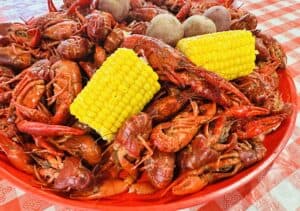
If you’d like to give Barrios’ crawfish a try, here’s the crawfish season schedule for Bayou Boys Catering.
- Thursday, 5-8 p.m.
- Friday, 5-8 p.m.
- Saturday, 2-8 p.m.
- Sunday, noon – 6 p.m.
Bayou Boys is a Grab-N-Geaux style business. The public is welcome to enjoy crawfish on the porch, but please note: table service is not provided. For more information or catering inquiries, contact Barrios at 281.450.4730.















Leave a Reply